 Pin to Pinterest
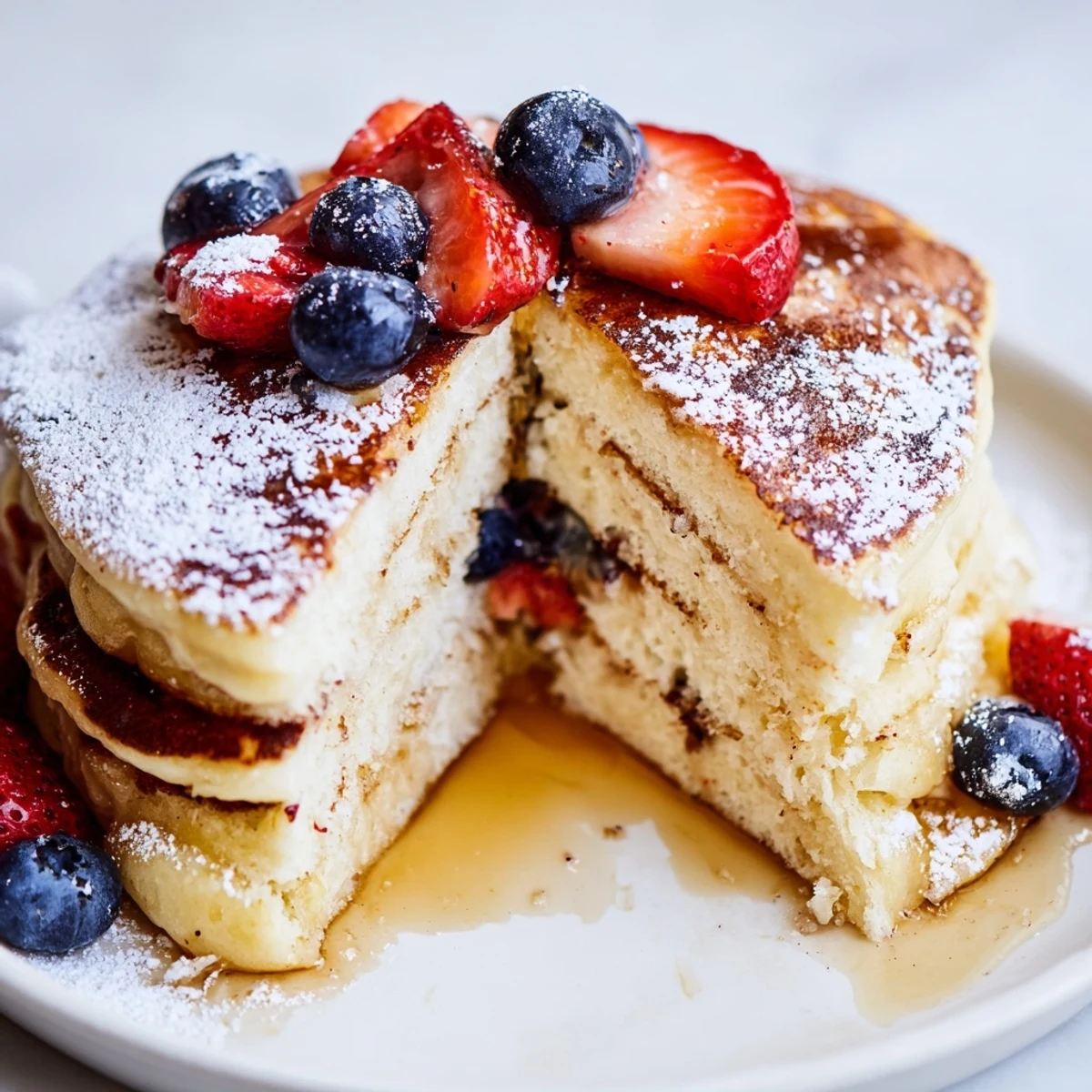
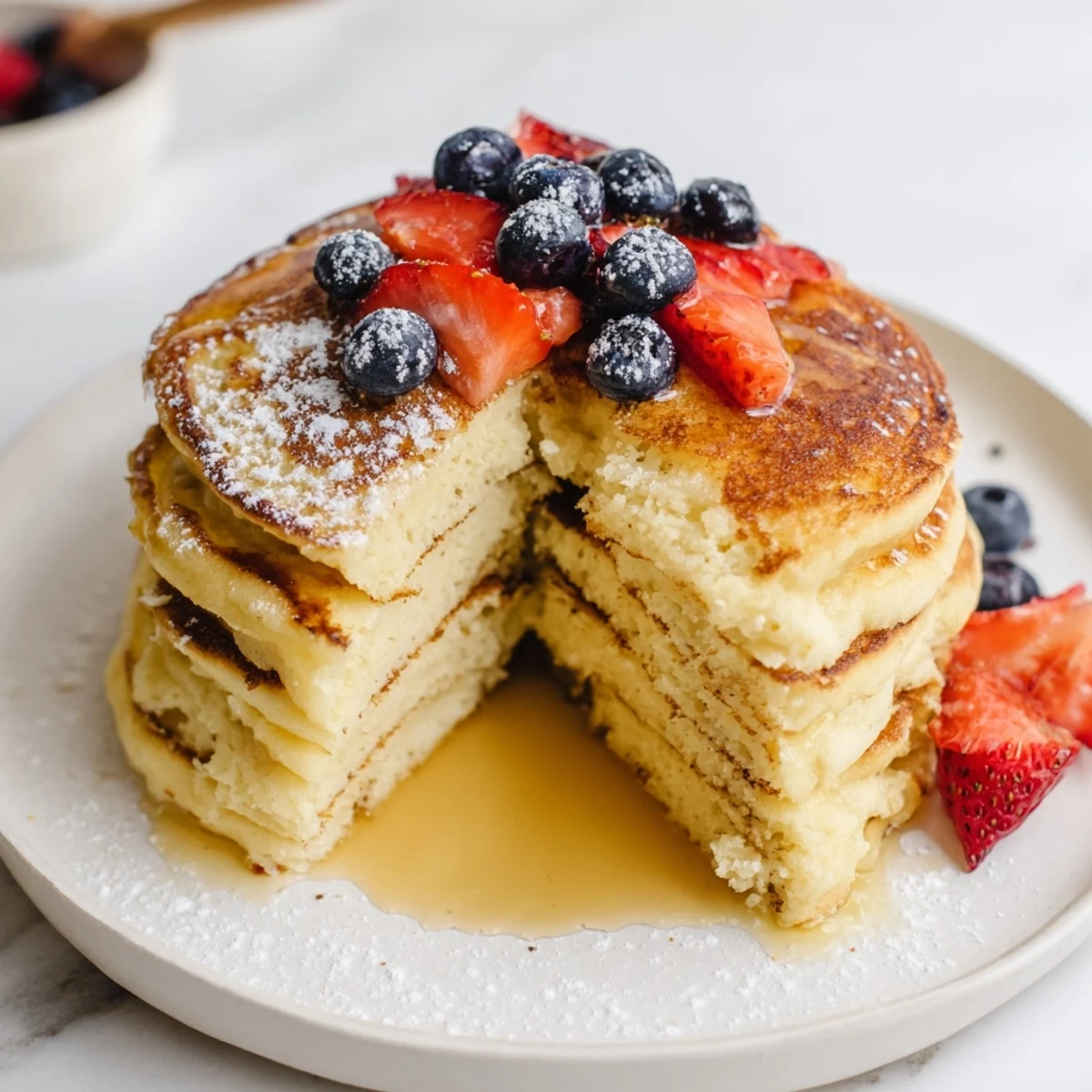
 These lemon ricotta pancakes boast a delicate balance of fluffy texture and bright citrus notes, achieved by folding whipped egg whites into a creamy ricotta batter blended with fresh lemon zest and juice. Cooking on a greased nonstick skillet until golden, they're perfect when served warm with maple syrup and optional fresh berries. This method creates tender, airy pancakes ideal for a satisfying breakfast or brunch.
Simple ingredients like flour, ricotta, and eggs combine with baking powder and soda for rise, while vanilla extract adds subtle aroma. The key step is gently folding whipped egg whites to maintain lightness. Additional lemon zest can intensify flavor, and variations include using gluten-free flour or cottage cheese. These pancakes balance creamy richness with bright citrus and sweet syrup for a flavorful morning treat.
There's something about the smell of lemon zest hitting a hot pan that makes Sunday mornings feel special. My neighbor mentioned once that her nonna used to make pancakes with ricotta, and I couldn't shake the idea—turns out, that one comment led me down a path of turning ordinary breakfasts into something that tastes like a small celebration. These fluffy, tangy pancakes with their delicate crumb and bright lemon flavor became my answer to the question of what to make when someone you care about is sitting at your kitchen table. Now, they're the first thing I reach for when I want breakfast to feel like more than just breakfast.
I made these for my partner on a Tuesday when neither of us had slept well, and he looked at the plate like I'd performed actual magic. That moment—watching someone's whole face brighten because of something you cooked—that's when I understood why I keep coming back to this recipe. It's not fancy, but it feels thoughtful in exactly the right way.
Ingredients
- Ricotta cheese (1 cup): This is what makes these pancakes different—creamy, tangy, and full of moisture. Don't use low-fat varieties; they'll make the texture thin and sad.
- All-purpose flour (1 cup): The foundation, but keep it airy by stirring it gently rather than packing it down when measuring.
- Granulated sugar (2 tbsp): Just enough to add a whisper of sweetness without making them syrup-dependent.
- Baking powder (1 tsp) and baking soda (1/4 tsp): The dynamic duo that creates lift; together they're crucial, so don't skip either one.
- Fine sea salt (1/4 tsp): A tiny bit makes the lemon flavor pop and balances the sweetness beautifully.
- Eggs (2 large, separated): The yolks go into the batter for richness, while the whites get beaten separately to create that signature cloud-like texture.
- Whole milk (3/4 cup): It thinned the batter without making it runny, creating the perfect pourable consistency.
- Unsalted butter (2 tbsp, melted): Cooled slightly so it doesn't scramble the yolks when you combine everything.
- Lemon zest (1 tbsp, finely grated): Use a microplane for the finest zest possible; it distributes more evenly throughout the batter than larger pieces.
- Fresh lemon juice (2 tbsp): It adds tartness and prevents the flavor from becoming one-dimensional.
- Pure vanilla extract (1 tsp): A small touch that deepens and rounds out the lemon flavor without announcing itself.
Instructions
- Whisk the dry team:
- In a large bowl, combine flour, sugar, baking powder, baking soda, and salt. I like to stir these together slowly, making sure the baking soda isn't lurking in any corner.
- Build the wet mixture:
- In another bowl, whisk together ricotta, egg yolks, milk, melted butter, lemon zest, lemon juice, and vanilla until smooth. The ricotta might look a bit lumpy at first, but keep whisking gently until it softens.
- Combine with restraint:
- Pour the wet ingredients into the dry ingredients and stir gently with a spatula, just until the dry streaks disappear. Overmixing will make the pancakes dense and tough, so stop as soon as everything comes together.
- Fold in the clouds:
- In a clean bowl, beat the egg whites until stiff peaks form. Add them to the batter in two additions, folding gently each time to keep as much air as possible trapped inside.
- Get the pan ready:
- Heat a nonstick skillet or griddle over medium heat and lightly butter or oil it. I test readiness by flicking a tiny drop of water on the surface; it should sizzle gently.
- Cook with patience:
- Pour about 1/4 cup of batter per pancake onto the skillet. Wait for bubbles to form across the surface and the edges to look set (about 2–3 minutes), then flip and cook until golden (another 1–2 minutes).
- Keep them warm:
- As you finish each batch, transfer the pancakes to a warm plate or low oven so they stay fluffy while you cook the rest. Greasing the pan between batches keeps everything from sticking.
 Pin to Pinterest
 There was a quiet morning when my five-year-old nephew helped me grate lemon zest by standing on a stool and just watching my hands move. He couldn't quite do it himself, but he asked a hundred questions about why lemon smells so bright and what it would taste like in pancakes. When we plated them and he took that first bite, he declared them the best pancakes he'd ever had—and I realized the recipe had somehow become less about technique and more about those small moments of teaching someone to notice the details that make food memorable.
The Science Behind the Fluff
These pancakes owe their reputation to the separation of eggs, which is a technique that sounds fancy but is really just smart chemistry. The whites trap air when beaten, creating thousands of tiny bubbles that expand in the heat and make the pancakes rise impossibly high. The yolks, meanwhile, stay in the batter to add richness and help bind everything together. It's the reason these pancakes feel different from regular ones—lighter, more delicate, almost cloud-like on your tongue.
Playing with Flavor
The lemon and ricotta combination is a classic pairing in Italian cooking, and tasting it in pancake form was a revelation. If you're the adventurous type, you can bump up the lemon zest to 2 tablespoons for an even brighter punch, or add a tiny pinch of lemon extract along with the vanilla. I've also played with almond extract, which adds a subtle nuttiness without competing with the lemon. Some mornings, I've drizzled them with lemon curd instead of maple syrup, which turns them into something between breakfast and dessert.
Make It Your Own
The beauty of this recipe is how flexible it is once you understand the foundation. You can swap the ricotta for cottage cheese if that's what you have, though the texture will be slightly different—a little less creamy and a touch grainier, but still delicious. If gluten-free baking is your thing, a good gluten-free flour blend works beautifully here; just make sure it includes xanthan gum for structure. Dairy-free folks can experiment with coconut milk and plant-based ricotta, though the flavor profile shifts slightly. The core technique—whipped egg whites folded into a gentle batter—stays the same.
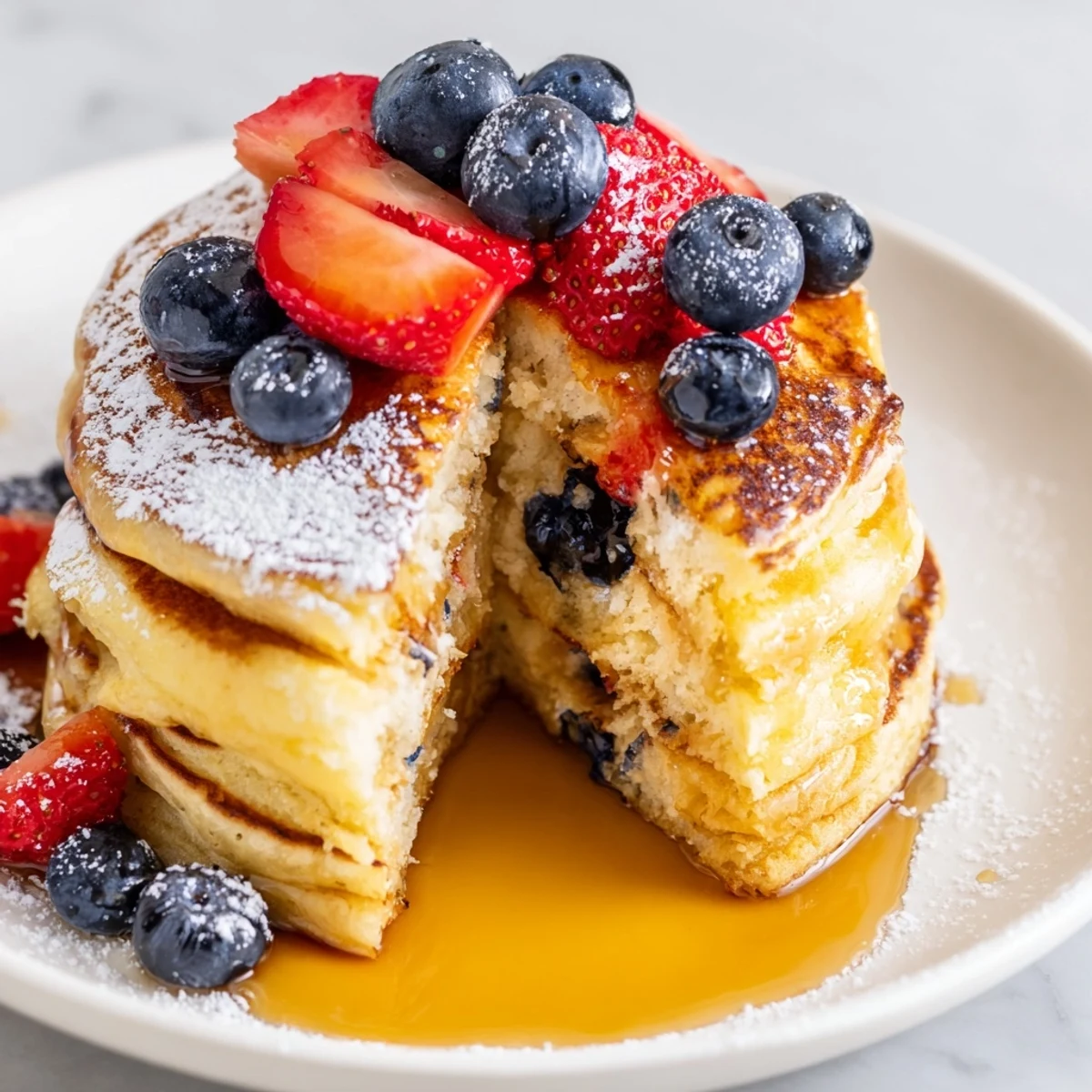
- Serve with warm maple syrup, fresh berries, or a dusting of powdered sugar to keep things simple and let the pancakes shine.
- Leftover pancakes can be frozen and reheated in a low oven, which keeps them surprisingly fluffy.
- Make the batter up to an hour ahead, but fold in the egg whites just before cooking for maximum lift.
 Pin to Pinterest
 These pancakes have become my answer to so many different mornings—the rushed ones, the celebrate-something-small ones, and the I-need-to-show-someone-I-care ones. They're proof that breakfast doesn't have to be complicated to feel meaningful.
Recipe FAQs
- → How do ricotta and whipped egg whites affect texture?
-
Ricotta adds moisture and creaminess, while whipped egg whites lighten the batter, resulting in fluffy, tender pancakes.
- → What is the best way to incorporate lemon flavor?
-
Use freshly grated lemon zest and fresh lemon juice to infuse bright, natural citrus notes without overpowering.
- → Can I substitute the flour for gluten-free options?
-
Yes, a gluten-free flour blend can replace all-purpose flour for a similar texture suitable for gluten-sensitive diets.
- → How should I cook the pancakes for best results?
-
Use a greased nonstick skillet on medium heat, cook until bubbles form and edges set, then flip to achieve golden-brown surfaces.
- → What toppings complement these pancakes?
-
Warm maple syrup enhances sweetness, while fresh berries and powdered sugar offer fresh and delicate finishing touches.
- → Can ricotta be replaced with another cheese?
-
Cottage cheese can be used instead of ricotta for a slightly different texture without sacrificing moisture.