
 Pin to Pinterest
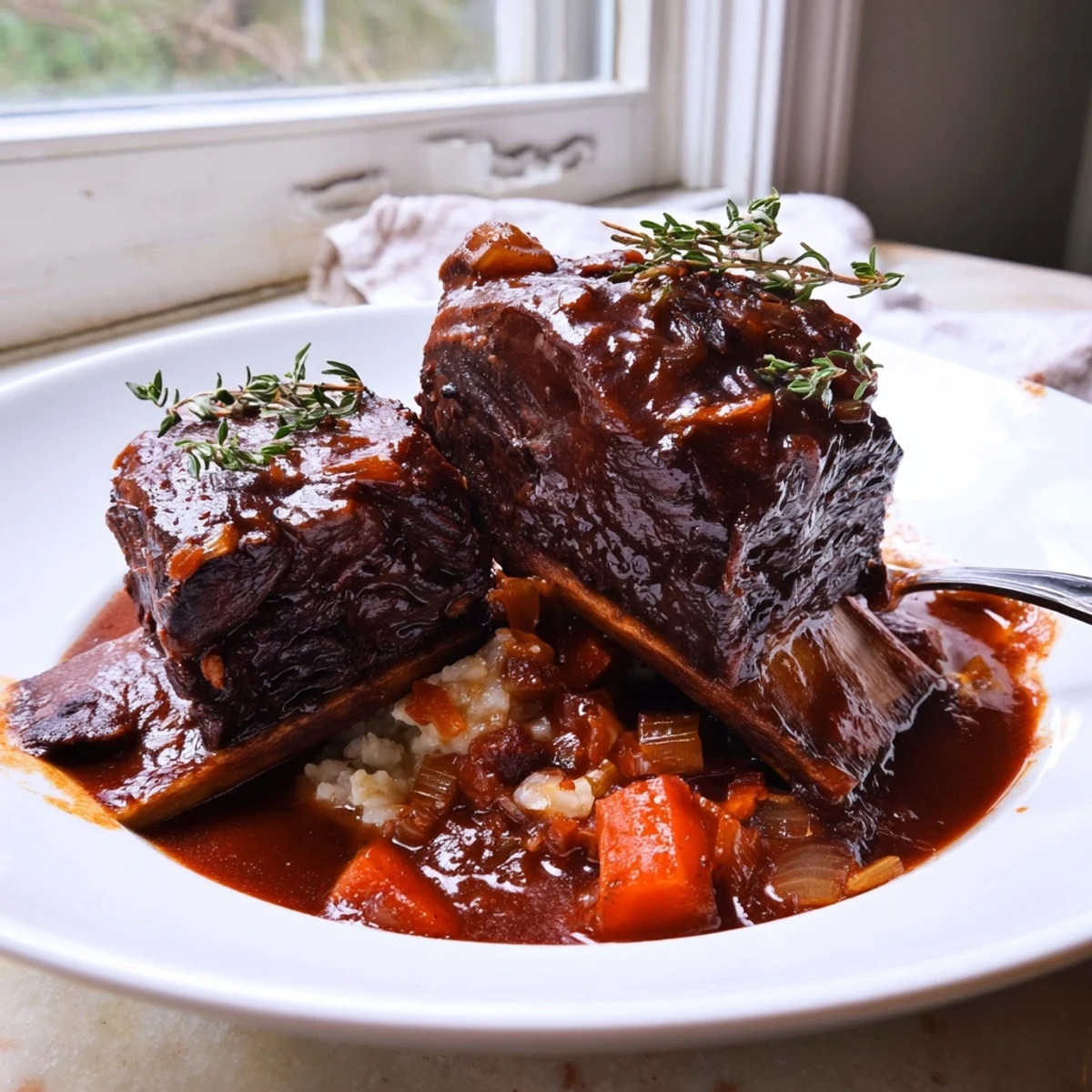
 These tender oven-braised beef short ribs are seared to a deep golden crust, then slowly cooked in a rich red wine and beef broth sauce alongside onions, carrots, celery, and fragrant herbs.
After nearly three hours in the oven, the meat becomes incredibly fork-tender and practically falls off the bone. The braising liquid reduces into a luscious, deeply flavored sauce that pairs beautifully with mashed potatoes or polenta.
Perfect for special occasions or a comforting weekend dinner, this French-inspired dish delivers restaurant-quality results with straightforward home cooking techniques.
The apartment smelled like a Parisian bistro for three solid days after I first made these short ribs, and honestly, I was not mad about it. Rain was hammering the windows, the kind of evening where ordering takeout felt like giving up, and a slab of bone in short ribs from the butcher sat in my fridge daring me to do something ambitious. Three hours later I was spooning glossy, wine dark sauce over mashed potatoes and wondering why I ever bothered with steak.
I served these at a dinner party once where the conversation completely stopped for a good two minutes after the first bite, which is the highest compliment I have ever received that did not involve words. My friend David looked at me with sauce on his chin and just nodded slowly, like I had finally proven something important.
Ingredients
- 4 lbs bone in beef short ribs: Go for the meatiest ones you can find, with good marbling throughout, because that fat is what makes everything luxurious and tender after hours of slow cooking.
- Salt and freshly ground black pepper: Season the ribs more aggressively than you think is necessary before searing, because that crust needs to hold its own against the deep braising liquid.
- 2 tbsp olive oil: Just enough to get a hard sear going in the pot without burning.
- 1 large onion, chopped: The sweet backbone of the aromatics, breaking down into the sauce and giving it body.
- 2 carrots, chopped: They add a subtle sweetness that balances the wine and tomato paste beautifully.
- 2 celery stalks, chopped: Do not skip these, they provide an earthy depth that you will absolutely notice if it is missing.
- 4 garlic cloves, minced: Fresh only, and add them late so they do not burn and turn bitter.
- 2 tbsp tomato paste: This is the secret weapon, a small amount that concentrates the entire flavor profile and gives the sauce its gorgeous deep color.
- 2 cups dry red wine: Use something you would actually drink, a Cabernet or Merlot works wonderfully, and never cook with a wine you would not pour into a glass.
- 2 cups beef broth: This alongside the wine creates enough liquid to almost submerge the ribs, which is exactly what you want for even braising.
- 2 sprigs fresh thyme: Woody, floral, and essential to that classic French flavor.
- 2 sprigs fresh rosemary: A little goes a long way here, infusing the whole pot with piney warmth.
- 2 bay leaves: Toss them in whole and fish them out before serving, they do quiet background work that ties everything together.
Instructions
- Preheat and prepare the ribs:
- Set your oven to 325 degrees Fahrenheit, then pat the short ribs completely dry with paper towels and season them all over with salt and pepper, getting into every crevice.
- Build the sear:
- Heat olive oil in a large Dutch oven over medium high heat until it shimmers, then sear the ribs on all sides until you get a deep brown crust, about 3 to 4 minutes per side, and transfer them to a plate.
- Soften the aromatics:
- In the same pot with all those gorgeous fond bits stuck to the bottom, toss in the onion, carrots, and celery, cooking until softened and starting to caramelize, about 5 minutes, then stir in the garlic for one more minute.
- Layer in the flavor base:
- Stir in the tomato paste and let it cook for a minute until it darkens slightly, then pour in the entire bottle of wine, scraping up every last browned bit from the bottom of the pot because that is pure flavor gold.
- Bring it all together:
- Let the wine reduce by half, about 10 minutes, then nestle the short ribs back into the pot, add the broth, thyme, rosemary, and bay leaves, and bring everything to a gentle simmer on the stovetop.
- Braise low and slow:
- Cover the pot with a tight fitting lid and slide it into the oven for 2.5 to 3 hours, checking near the end by piercing the meat with a fork, it should offer zero resistance and practically slide off the bone.
- Finish the sauce and serve:
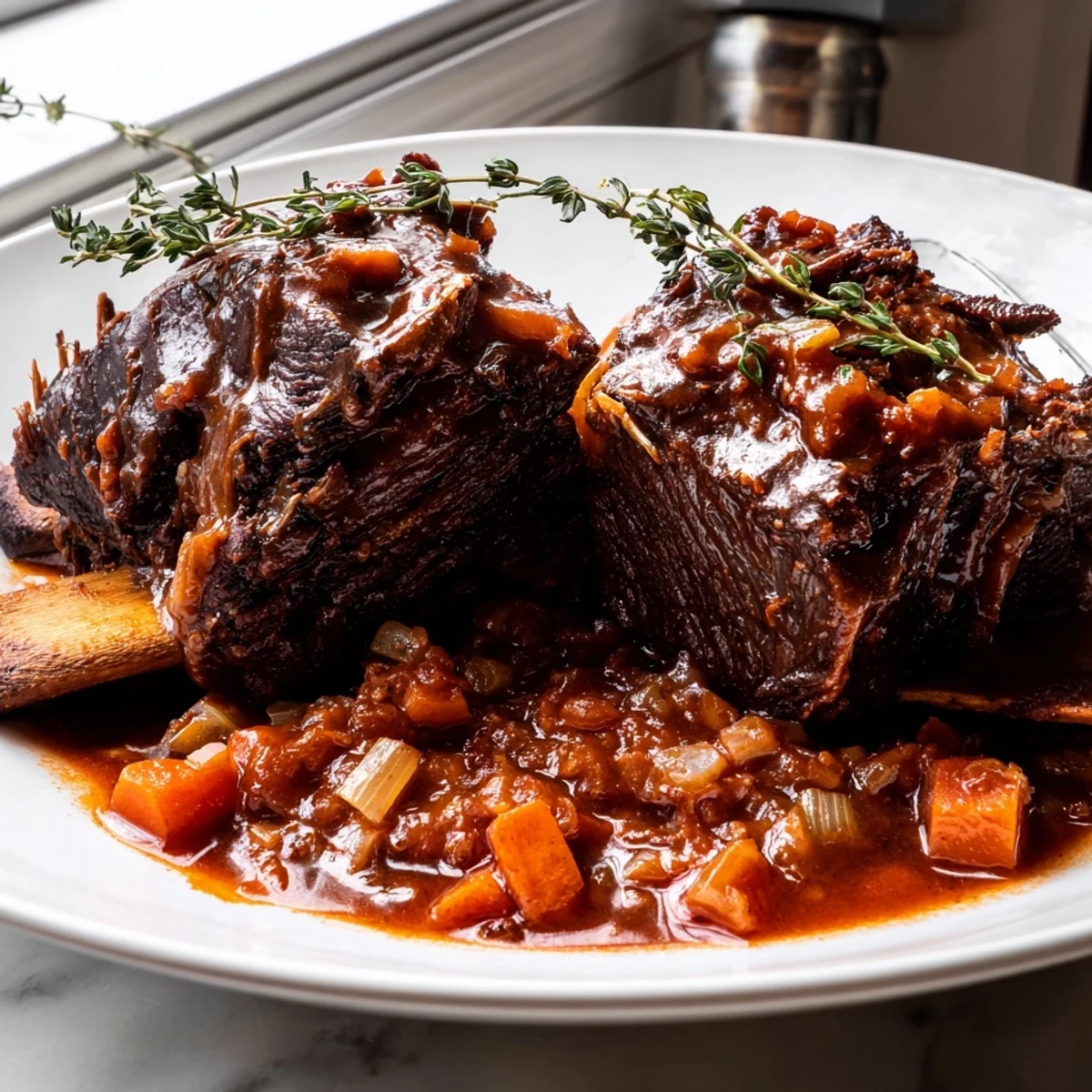
- Transfer the ribs and vegetables to a warm platter, discard the herb sprigs and bay leaves, then skim the excess fat from the braising liquid and reduce it on the stovetop until it coats the back of a spoon.
 Pin to Pinterest
 There is something deeply satisfying about pulling a heavy pot from the oven, lifting the lid, and being hit with a wave of aromatic steam that tells you dinner is going to be extraordinary. That quiet moment before plating, when it is just you and the pot and the smell of wine and herbs, might be my favorite part of the entire process.
Serving Ideas Worth Trying
Creamy mashed potatoes are the classic pairing and for good reason, they create a perfect pillow for the sauce to pool into, but I have also served these over soft polenta with a shower of parmesan and it was absolutely divine. A thick slice of crusty bread on the side works too, especially when you want something to mop up every last bit of that reduced braising liquid.
Making It Ahead
This is one of those rare dishes that genuinely tastes better the next day, because the sauce has time to settle and the collagen continues to transform into silky gelatin overnight. Let everything cool completely, refrigerate in the pot, and the next day you will find a solid layer of fat on top that lifts right off, leaving you with an even cleaner, more concentrated sauce when you reheat it gently on the stove.
A Few Extra Thoughts From My Kitchen
After making this recipe more times than I can count, a handful of small details have become second nature that I wish someone had told me early on. Here are the ones that matter most.
- Toss a handful of sliced mushrooms in with the vegetables for an extra layer of umami that takes the sauce somewhere truly special.
- If you only have chicken broth on hand, it works in a pinch, though the sauce will be slightly lighter in flavor.
- Always check the labels on your broth and wine for hidden allergens, even though this recipe is naturally gluten free and free of all major allergens.
 Pin to Pinterest
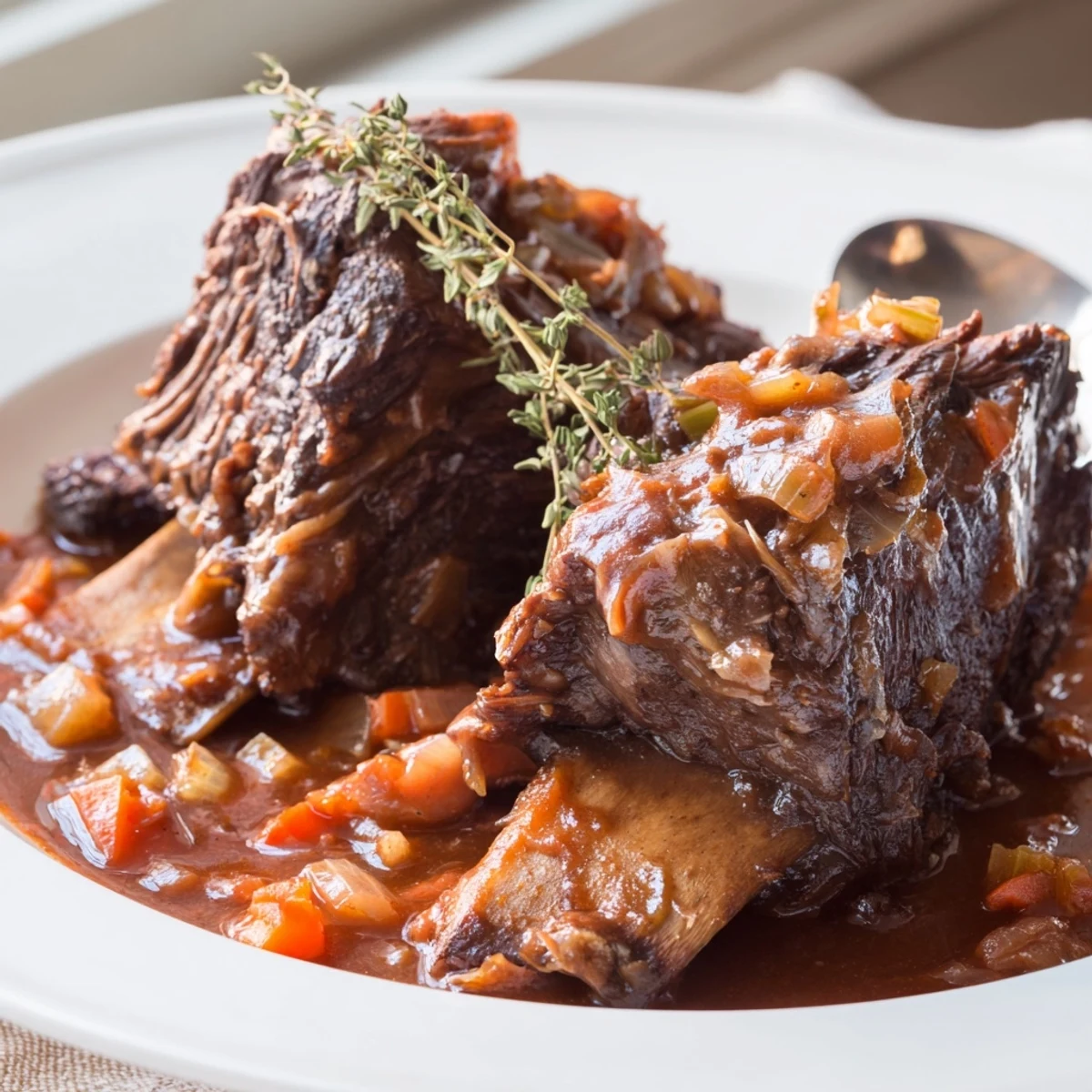
 Some meals are worth every minute of waiting, and these braised short ribs are exactly that kind of meal. Make them once, and they will become part of your permanent rotation, I can practically guarantee it.
Recipe FAQs
- → What cut of beef short ribs works best for braising?
-
Bone-in beef short ribs are ideal for braising because the bone adds rich flavor and helps keep the meat tender during the long cooking process. Look for thick, meaty ribs with good marbling throughout.
- → Can I prepare braised short ribs ahead of time?
-
Yes, braised short ribs actually taste better the next day. The flavors deepen and develop as the dish rests overnight in the refrigerator. Simply reheat gently on the stovetop or in a 325°F oven until warmed through.
- → What type of red wine should I use for braising?
-
A dry red wine like Cabernet Sauvignon, Merlot, or Pinot Noir works beautifully. Choose a wine you would enjoy drinking, as its flavor concentrates during the braising process. Avoid cooking wines, which tend to be overly salty.
- → How do I know when the short ribs are done?
-
The ribs are ready when a fork slides easily into the meat with no resistance, and the meat is pulling away from the bone. This typically takes 2.5 to 3 hours at 325°F. The collagen should have fully broken down, creating that signature melt-in-your-mouth texture.
- → What should I serve with braised beef short ribs?
-
Creamy mashed potatoes, polenta, or crusty bread are classic pairings that soak up the rich sauce wonderfully. Egg noodles or roasted root vegetables also complement the dish beautifully for a complete meal.
- → Can I make this dish without a Dutch oven?
-
You can use any heavy, ovenproof pot with a tight-fitting lid. A cast iron pot or deep roasting pan covered tightly with foil will work. The key is maintaining even heat distribution and keeping the moisture locked in during the long braise.